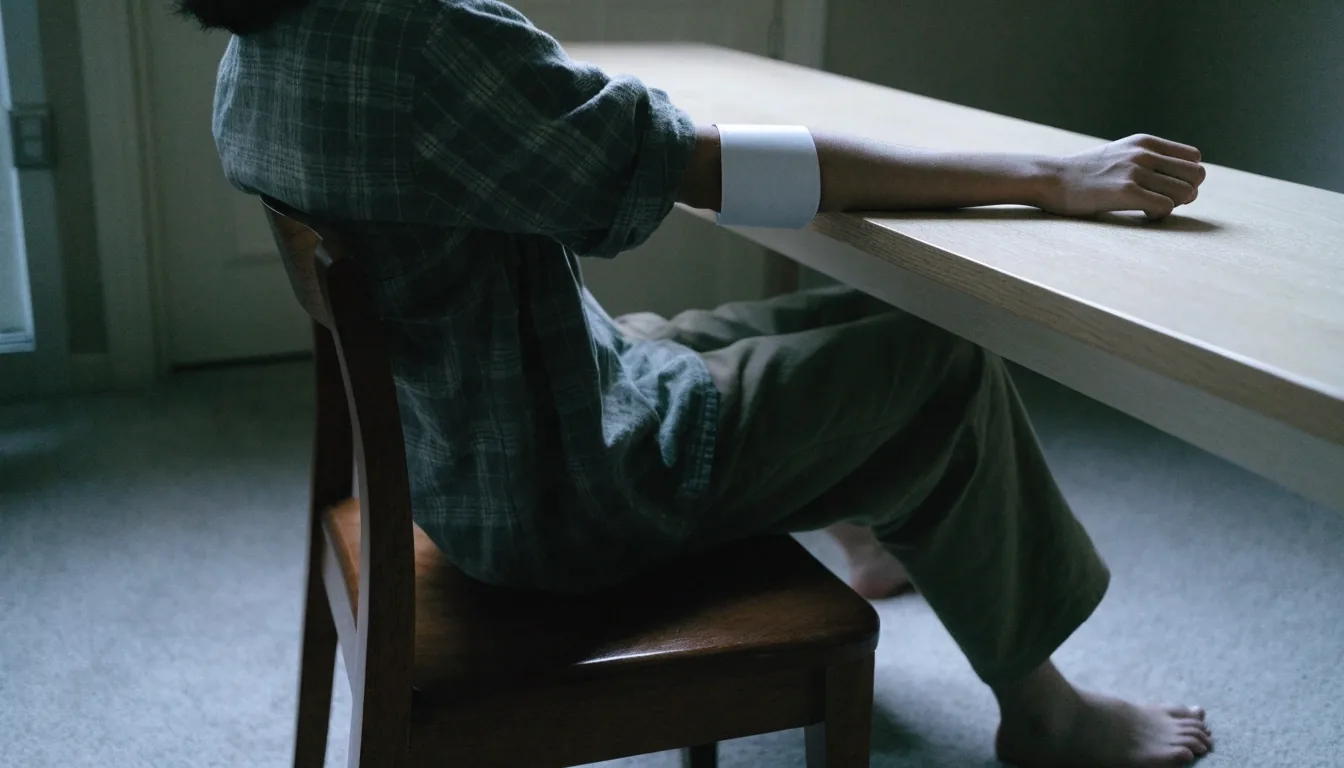
Home blood pressure monitoring
How to measure blood pressure correctly at home
Most unreliable readings come from the method, not the machine. The routine below takes about five minutes and removes the errors that push a number up or down.
Prepare before you put the cuff on
Preparation is the part people skip, and it is the cheapest accuracy you will ever buy. Empty your bladder first — a full bladder can raise a reading noticeably. Avoid caffeine, cigarettes and exercise for at least thirty minutes beforehand, and if you can, wait half an hour after a meal before you sit down to measure.
Sit quietly for five minutes before the first reading rather than clipping the cuff on the moment you sit. Remove anything tight from your upper arm: rolled-up sleeves that press into the arm will affect the result, so it is usually easier to take the reading on a bare arm. Keep the room at a comfortable temperature, because being cold raises blood pressure.
Before the cuff goes on
- Empty your bladder before you start
- No caffeine, cigarettes or exercise for thirty minutes
- Wait half an hour after a meal where you can
- Five minutes of quiet sitting before the first reading
- Bare arm, comfortable room, nothing tight on the arm
Sitting position, in detail
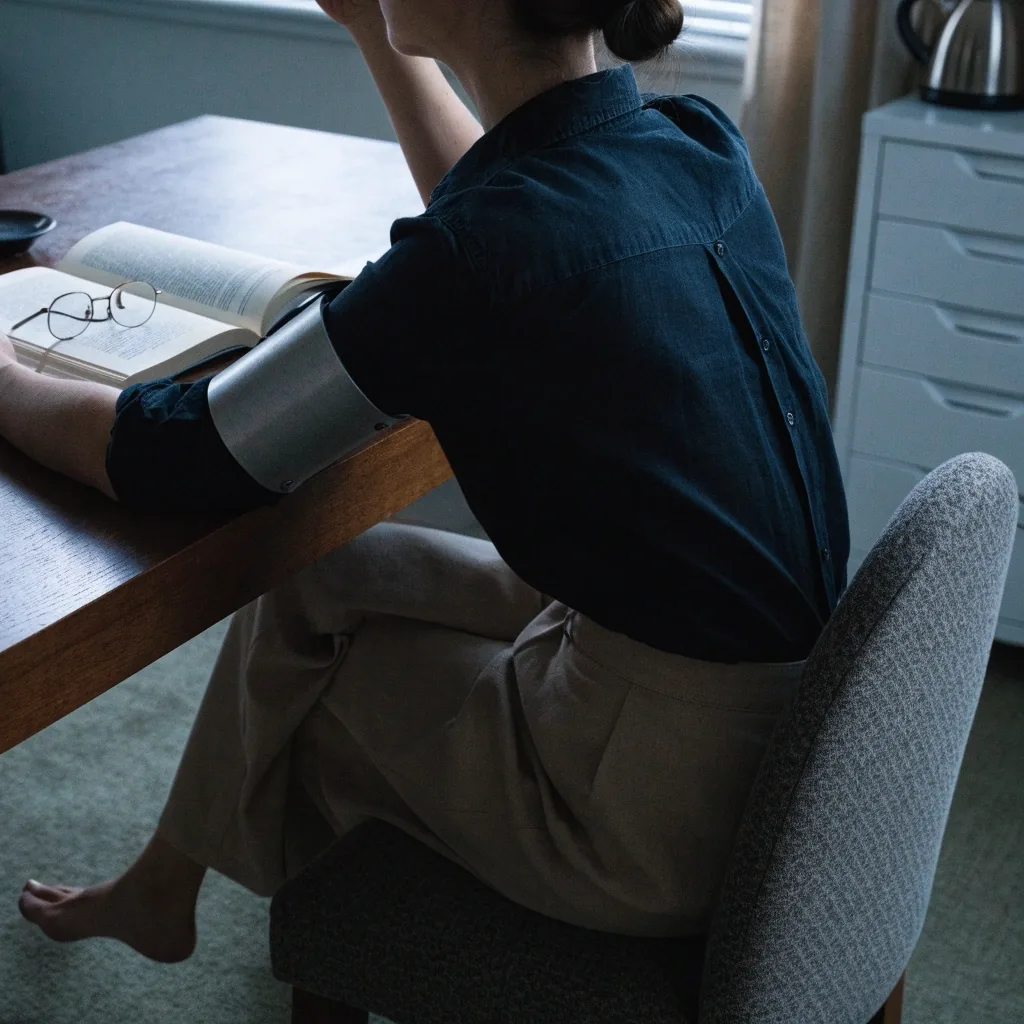
Sit in a chair with a back, feet flat on the floor, legs uncrossed. Rest your back against the chair rather than perching forward. Your upper arm should be supported at roughly heart level, which usually means resting it on a table or an armrest instead of holding it up yourself.
The cuff goes on the upper arm, its lower edge about two to three centimetres above the elbow crease, with the tube running down the inside of the arm. If the cuff sits over clothing, expect a higher reading. Do not talk during the measurement, and do not watch the display as it inflates — both quietly change what you record.
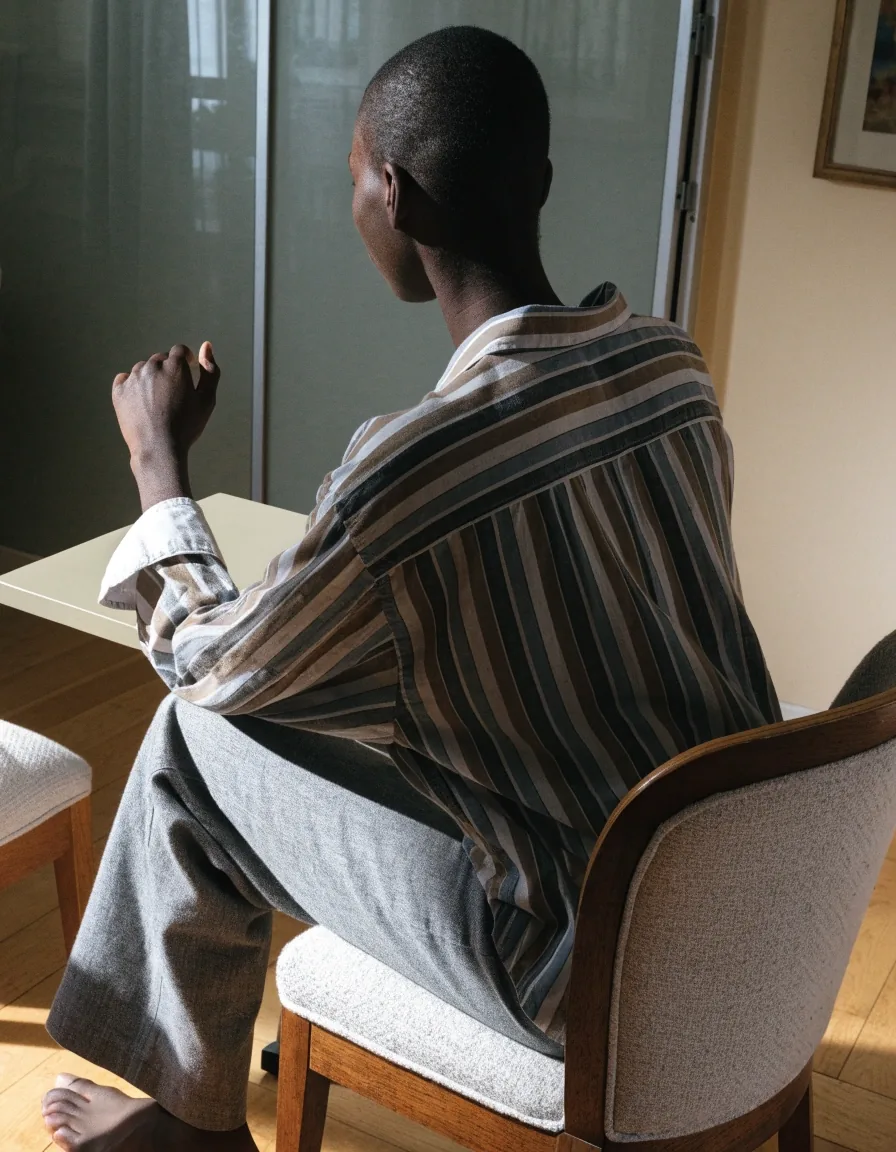
Feet flat, back against the chair, upper arm resting at heart level on the table. Holding the arm up yourself is enough to shift the number.
Take more than one reading
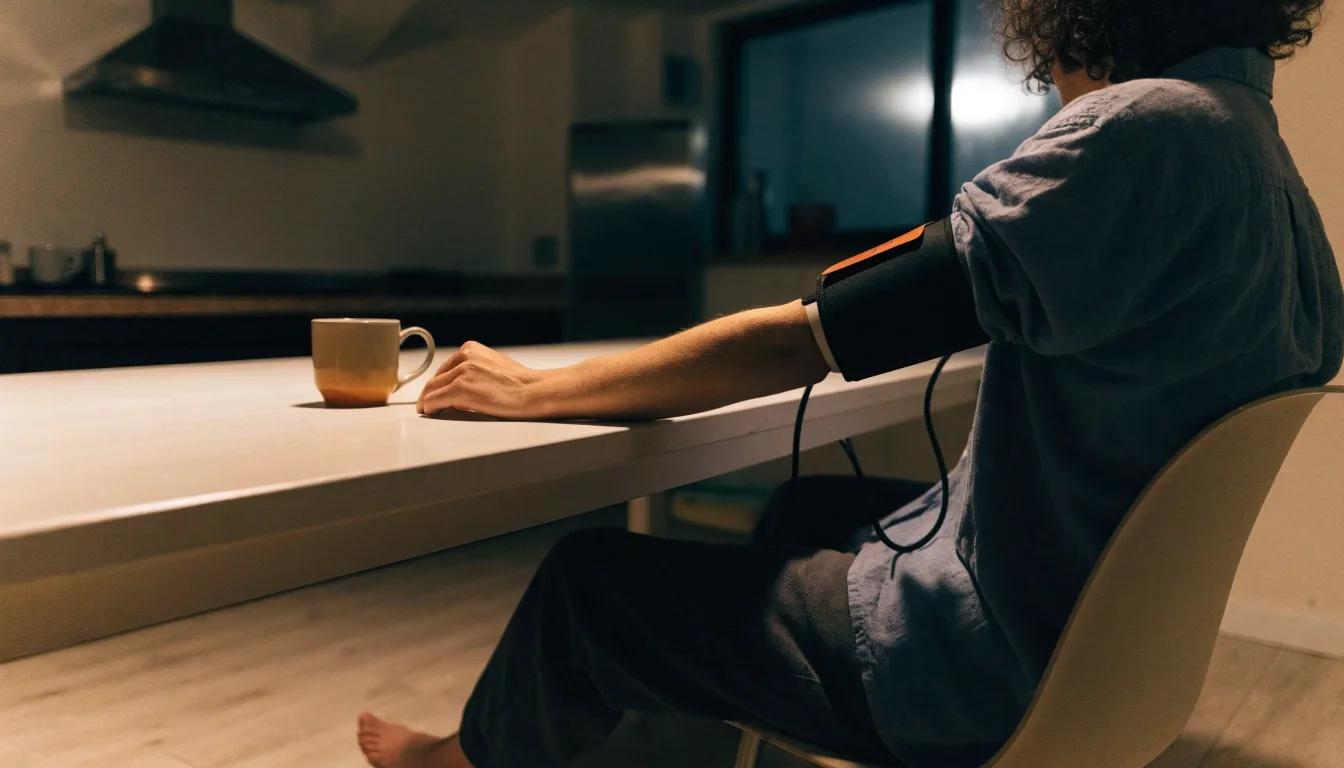
A single measurement is a single moment. Take two or three readings a minute apart and record them all, or average the last two. The first reading in a session is often the highest, which is exactly why clinicians do not base a decision on one number.
If the readings differ widely from each other, that usually points to a technique issue rather than a health one. Check the cuff position and your arm support, then repeat the whole session from the five-minute rest.
What a three-reading session looks like
Timing and frequency
Morning and evening are the usual slots, and consistency matters more than volume. Measure before medication if your GP has asked for that, and note the timing in your record. Checking at random points through the day produces numbers that are hard to compare with each other.
If you have been asked to provide a set of readings before an appointment, follow that schedule exactly. A week of consistent morning and evening readings is generally more useful than a scatter of measurements taken whenever you remembered.
A week that reads well
Seven days of that pattern gives a clinician a trend. Four readings grabbed across a fortnight gives them a puzzle instead.
Recording what you measured
Write the date, time, systolic and diastolic figures, and the pulse if your monitor shows it. Add a short note if anything unusual applied that day, such as illness, poor sleep or a missed dose. These details are what let a clinician read a trend instead of a list of numbers.
Keep the record in one place, whether that is a notebook, the monitor's memory or a phone app. Mixed formats are the main reason people arrive at appointments without a usable record.
Always include
Date and time
Always include
Systolic and diastolic
If shown
Pulse
Worth a note
Illness, poor sleep, missed dose
A page of dated readings in one column is easier for a practice nurse to scan in ninety seconds than five photos of a monitor screen taken on different days.
Mistakes that quietly distort results
Measuring over a sleeve, letting the arm hang unsupported, crossing your legs, talking during inflation, and taking a reading straight after rushing in are the common ones. Using a cuff that does not match your arm circumference is another, and it is the hardest to notice because the reading still looks plausible.
Wrist monitors add one more: the wrist must stay at heart level for the whole measurement. If it drifts, the reading changes. That is not a fault in the device, just a stricter requirement than an upper-arm cuff imposes.
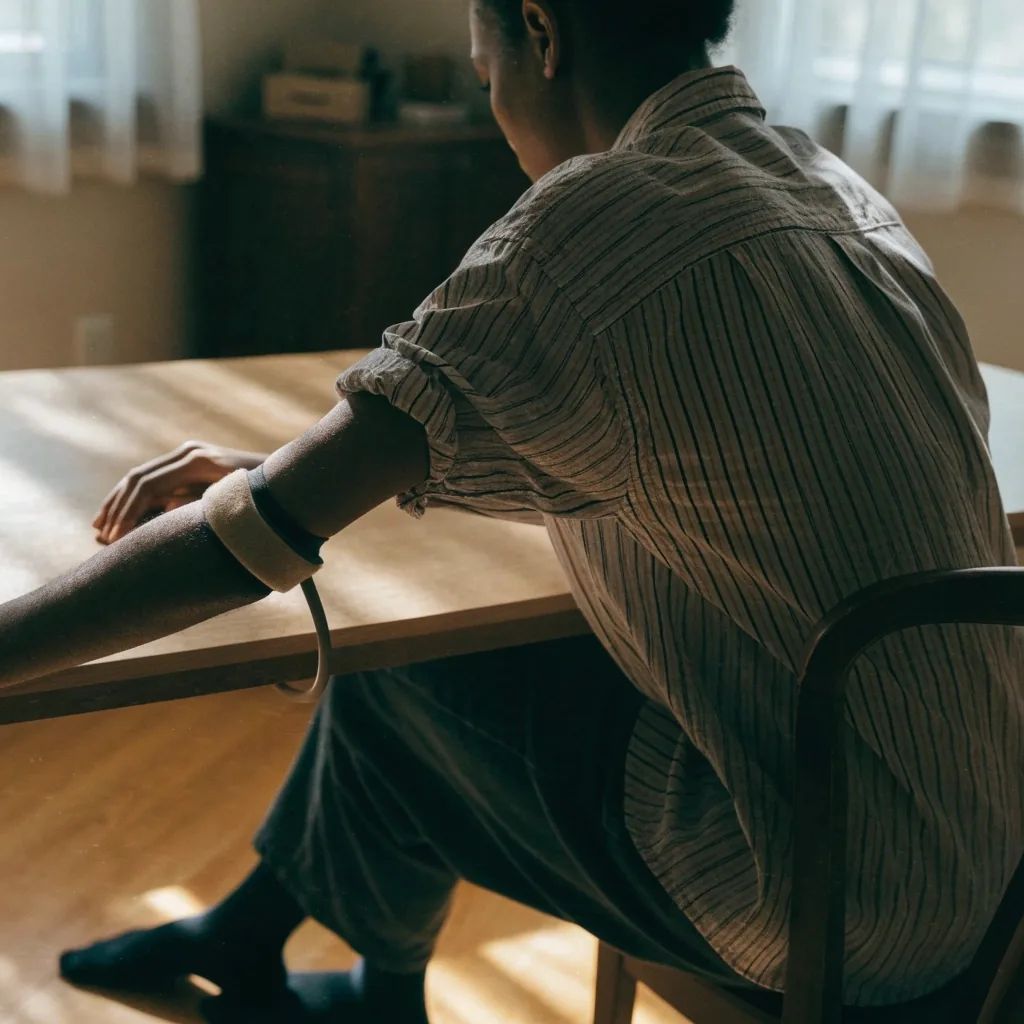
- Cuff over a sleeve
- Arm unsupported or held up
- Legs crossed
- Talking during inflation
- Cuff size that does not match the arm
When the reading does not look right
Repeat the measurement before drawing any conclusion. Check the cuff position and size, sit quietly for another few minutes, and try again. If the reading is still unusual and you feel unwell, treat that as a clinical matter rather than a technique problem and speak to your GP, a pharmacist or NHS 111.
If a monitor gives erratic results across sessions despite good technique, it may be worth checking whether the model is validated and whether the cuff is the right size. Our choosing guide covers both, and the NHS pathways page explains how a set of home readings travels into a GP appointment or a pharmacy review.
Questions people ask before their first week
Should I measure my blood pressure before or after taking medication?
Follow whatever your GP or practice nurse has asked for, and note the timing consistently. Some clinicians want readings before medication to see the untreated level; others want them at a fixed point in the day. The key is not to switch between the two without being asked.
Can I take a reading while lying down?
Seated readings are the standard for home monitoring. Some clinicians ask for standing readings as well, particularly if you feel dizzy on standing, but that should be a specific instruction rather than a substitute for the seated routine.
How long should I rest before measuring?
Around five minutes of quiet sitting is the usual guidance. Rushing straight from activity into a measurement is one of the most common reasons a home reading comes out higher than expected.
What if my two readings are very different?
Check the cuff position, make sure your arm is supported at heart level, and repeat after a further minute of quiet sitting. Large swings within a single session usually point to technique rather than to a change in your health.
Which cuff size do I need?
Measure the mid-point of your upper arm and match it to the range printed on the cuff you own. A cuff that is too small over-reads, and the number still looks believable, which is why this mistake survives for months. If your arm sits between two sizes, the larger cuff is the safer fit for home monitoring.
Where to go next
This page covers the routine. The rest of the site covers the equipment, the numbers and the NHS route around them, and you are welcome to ask us a technique question if something in your own readings still looks odd.
Healthy Wisdom Age
- 88 Park Street, Bristol, BS1 5JG
- +44 117 496 0592
- [email protected]
- Monday to Friday, 9:00 AM – 6:00 PM
Educational guidance only. For a reading that worries you, or if you feel unwell, contact your GP, a pharmacist or NHS 111.