
Healthy Wisdom Age
About Healthy Wisdom Age
An educational resource about home blood pressure monitoring, written for people in the UK who want to read their own numbers properly.
What we are
The ground between buying a monitor and sitting in a consultation
Healthy Wisdom Age is an educational resource about monitoring cardiovascular health at home, written for people in the UK who want to understand their blood pressure readings and use a home monitor properly.
We do not sell devices, provide diagnoses, or offer clinical advice. What we do is explain the practical detail that sits between buying a monitor and sitting in a consultation: how a reading is taken, what the two numbers mean, and how a record of home readings reaches the clinician who can act on it.
That means the site is deliberately small in scope. Everything here supports one job, and nothing here pretends to replace the person treating you.
What this site covers
Four subjects, covered in enough depth to be useful. Each one has its own guide, and each guide is written to be read in one sitting.
We are not a general health site. Fitness tracking, nutrition and conditions outside cardiovascular monitoring are not covered here. Staying inside one subject lets us go into the practical detail that general health content tends to skip.
Who writes the content
Pages are written and edited in-house by the Healthy Wisdom Age editorial team, based in Bristol. We work from published UK guidance and from the validation information maintained by the British and Irish Hypertension Society and STRIDE BP, rather than from manufacturer marketing material.
Where we describe a device, a brand or a service, we say what it is and what it does. We do not rank products by preference, and we do not accept payment for coverage. If a monitor appears on this site, it appears because the validation record for that model is public, not because anyone paid for the mention.
Working from a validation register rather than a product page changes the writing. Instead of listing features, we explain what a validated device is, which arm it belongs on, and how to tell whether the cuff on your own monitor actually fits you.

Written in Bristol
Editorial standards
Every page is checked against three questions before it is published. They are short questions, but they remove most of what makes health writing untrustworthy.
Is the claim traceable to a published source?
If a statement about blood pressure monitoring cannot be traced back to published UK guidance or a public validation record, it does not go on the page.
Is the language specific enough to be useful?
Vague reassurance helps nobody. We would rather say how a cuff should sit on the arm than tell you that measuring is easy.
Does the page avoid implying an outcome we cannot support?
No page here suggests that a monitor, a habit or a guide will change your health on its own. That judgement belongs with your clinician.
We do not use testimonials, ratings or outcome claims on this site, and we do not present before-and-after material. Where guidance changes, we update the affected pages rather than leaving them to age quietly at the bottom of a search result.
What we do not do
We do not diagnose high or low blood pressure. We do not recommend starting, stopping or changing medication. We do not tell you whether a specific reading is safe for you, because that depends on your history and your clinician's assessment.
We also do not claim that home monitoring replaces professional care. It supplements it. The readings you take at home are most useful when they reach the person treating you, in a form that person can read at a glance.
If a page on this site ever reads as though it is giving you clinical advice, that page is wrong and we would rather hear about it than leave it up.
Why home monitoring is worth getting right
Blood pressure often produces no symptoms. That is why routine checks matter, and why the NHS Health Check programme invites adults in England aged 40 to 74.
Home monitoring extends that principle into daily life, but only when the device is validated and the method is consistent.
Used well
A record a clinician can act on
Readings taken at the same times, with the same cuff and the same posture, build a pattern. A week of morning and evening pairs gives a GP far more to work with than a single number from a waiting room.
Used carelessly
Numbers that look authoritative and mean very little
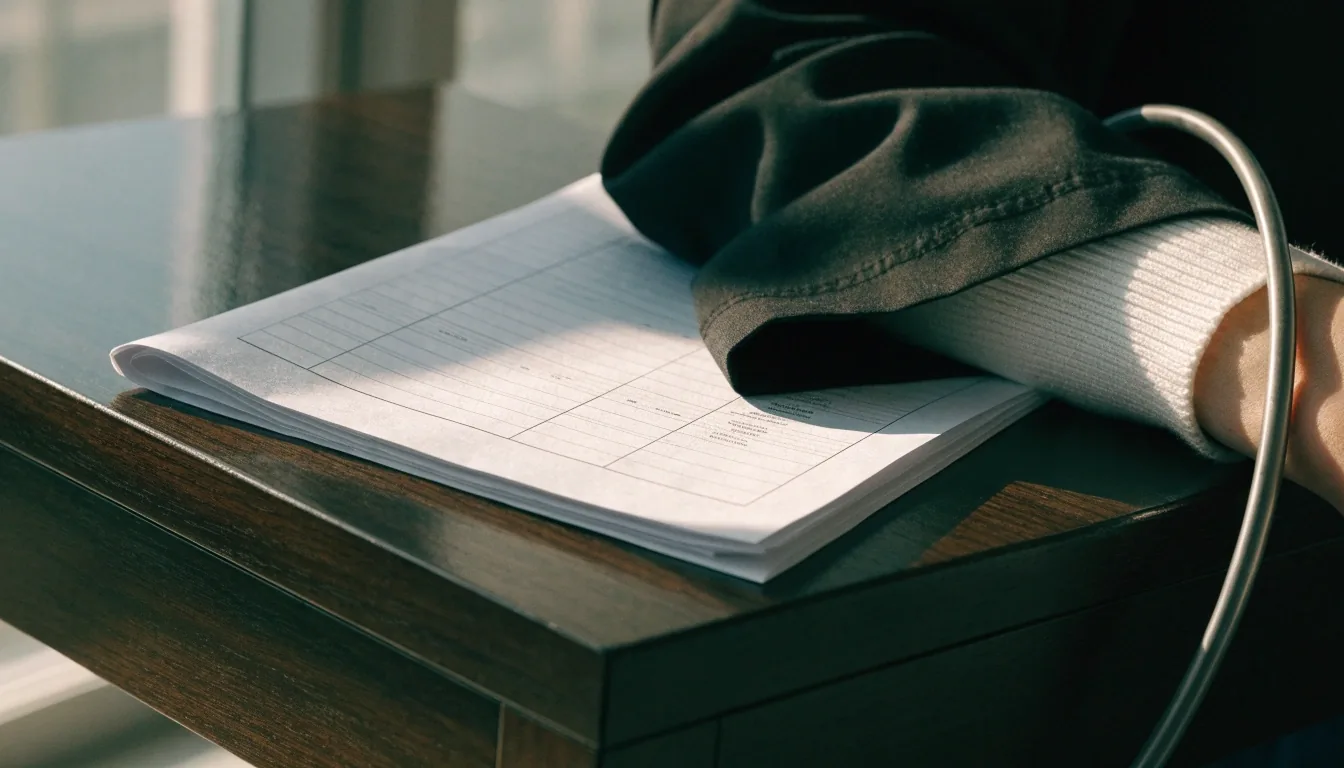
A cuff over a sleeve, an arm hanging unsupported, or a reading taken straight after a coffee produces a figure that is precise to two digits and wrong in practice. Most of what this site does is explain the difference.
The gap between those two columns is not about how much you spend on a monitor. It is about whether the monitor carries a validation record and whether the measurement is taken the same way each time.
Questions we are asked
Three questions come up more than any others.
Does Healthy Wisdom Age sell blood pressure monitors?
No. The site is educational. We explain how to choose a validated monitor and where they are sold in the UK, but we do not sell devices and we do not take commission on purchases.
Can you tell me whether my reading is normal?
No. Interpreting a reading depends on your history and other risk factors, which we do not have. Speak to your GP, practice nurse or NHS 111 if you are concerned about a reading.
How often is the content updated?
Pages are reviewed when the underlying UK guidance or validation information changes. If you notice something that appears out of date, the contact page is the fastest way to flag it.
How to reach us
If a page is unclear, if you have spotted something that needs correcting, or if you have a question about the material, the contact page explains how to get in touch. We read messages and reply where a reply is useful.
We cannot answer questions about your personal health or interpret your readings for you. Those questions belong with your GP, practice nurse or NHS 111.
Editorial office
Healthy Wisdom Age 88 Park Street, Bristol, BS1 5JG, United KingdomOffice hours
Monday to Friday, 9:00 AM – 6:00 PM